bulb sale, dahlia care, window views, best native shrubs
it’s bulb planting season!
Now that the lawn has been overseeded (again) with micro-clover and the tropical plants have found their way back inside the house, my attention turns to bulbs and planning for spring. Late October into November is the perfect time to add spring blooming bulbs to the garden. The soil has cooled a bit, and armed with our photo archives from this past spring, we can identify pockets of opportunity for more color and excitement among the perennial beds. Since I don’t cut down my gardens, it’s easy to find areas to tuck a bulb here and there in between perennials and shrubs.
I managed to muscle out a massive rudbeckia ‘Henry Eilers’ from the mailbox garden last week in order to create space for dahlias next spring. Since the dahlias will be started indoors and set out in late May, the empty space can be partially filled now with allium bulbs. As the dahlias grow, they will help camouflage the allium foliage as it naturally dies back. I’m always so glad every spring that I took the time to add to my allium ‘collection’ the prior year.
Speaking of dahlias, our Community Hospice House volunteer, Yi-ling Shen, is our resident ‘dahlia expert’ and she will soon be instructing us on how to dig, divide and store for winter. More on that coming soon!
Mine are still in the ground and the foliage continues to blacken after each cold, frosty night. Yi-ling assures me that the tubers are fine and continuing to develops ‘eyes’ that will be important to identify come time to divide. I will be taking lots of notes as I am committed to finally having a lot of success with dahlias in 2027!
purchase bulbs at wholesale prices!
I still have lots of bulbs available for purchase at significantly below retail prices, so please let me know when you can stop by to pick some up for your garden. I will be home much of this weekend and next week and am happy to help you select the best varieties for your garden.
This chart will give you an idea of the relative shape, height and bloom time as well as bloom size and color. Plant in well drained sites for years of enjoyment!
Since I buy in bulk at wholesale prices, I can offer bulbs usually at about 50%-60% below retail. For example, Schubertii bulbs are only $1.30 each compared to $3-5 each retail. All bulbs are priced about half of retail. Bulb quality is outstanding and superior to what you will find at the big box stores.
In addition to allium I have early blooming muscari and Iris reticulata ‘Harmony’ which are both wonderful for naturalizing, helping to sustain emerging queen bumblebees. For narcissus lovers, I have the lovely creamy white ‘Thalia’ and ‘Poeticus’ which are both very long blooming and fragrant. Scilla maderensis is something new and needs to be potted up and protected from freezing temps…surely a fun experiment this winter! I can give you more details on that, if interested.
Call or text me at 603-494-4781 to schedule a time to come shop. Or send me a text or email at barb@thebiglittlegarden.com with your order and I will reserve your bulbs until you can come pick them up at my house.
don’t forget about the window views!
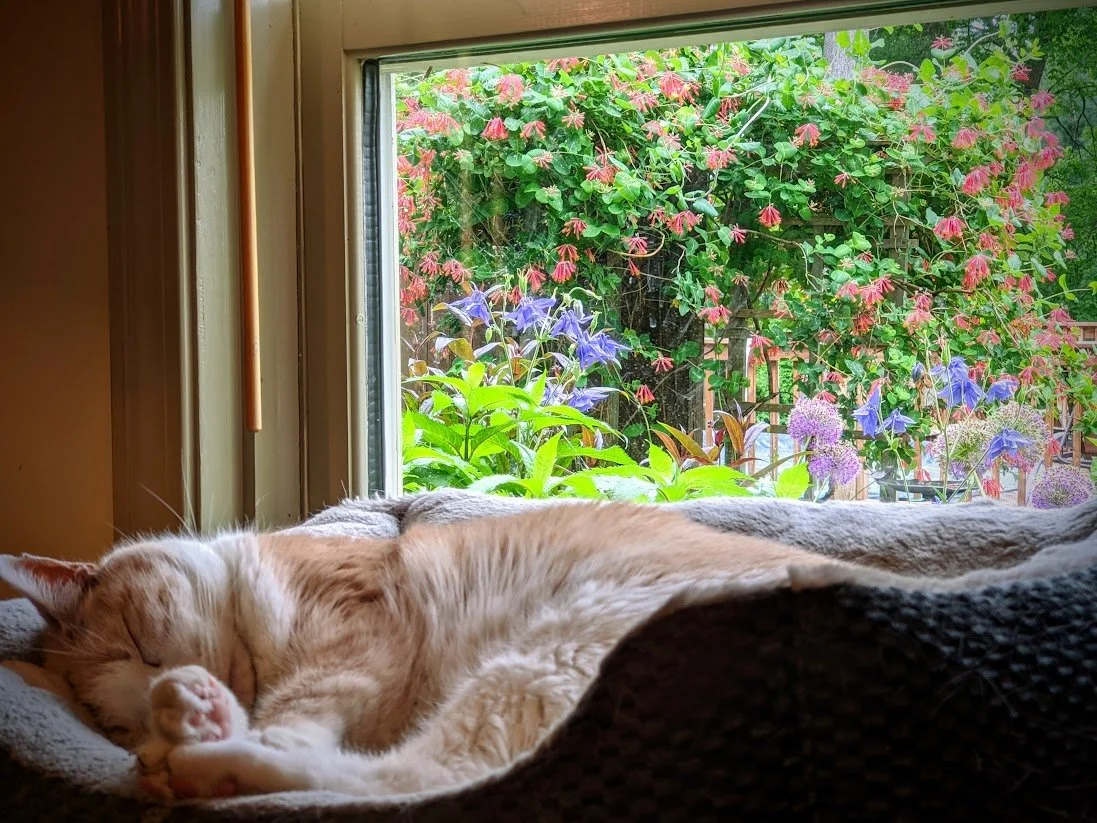
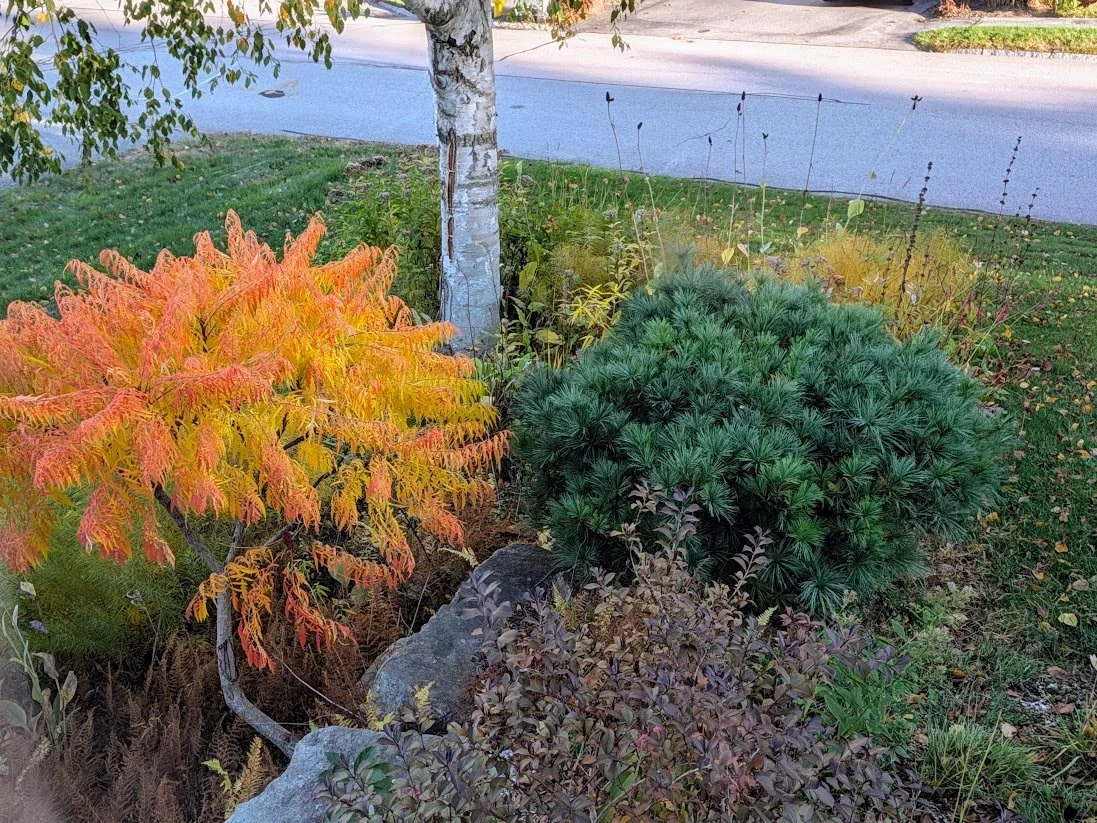
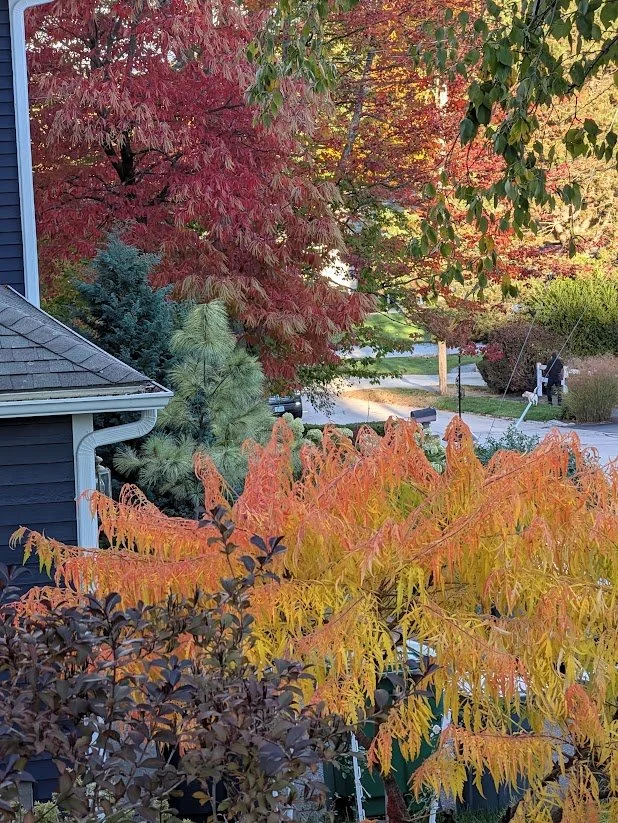
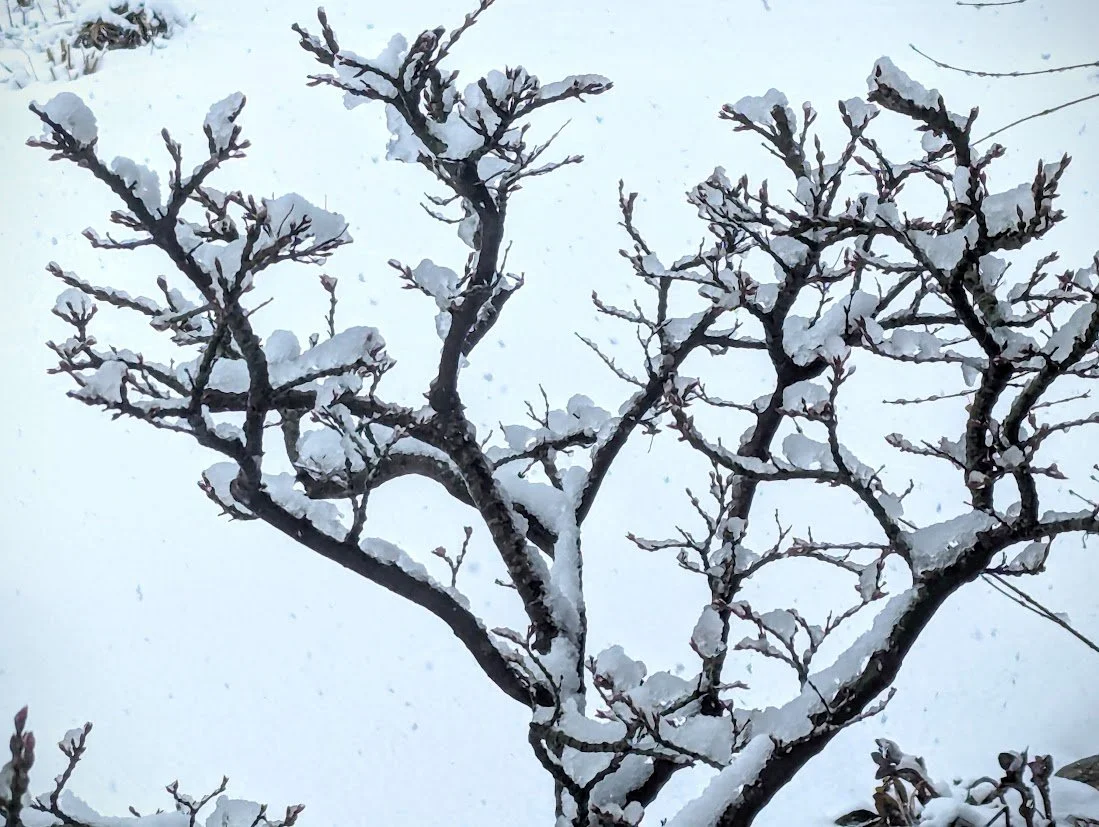
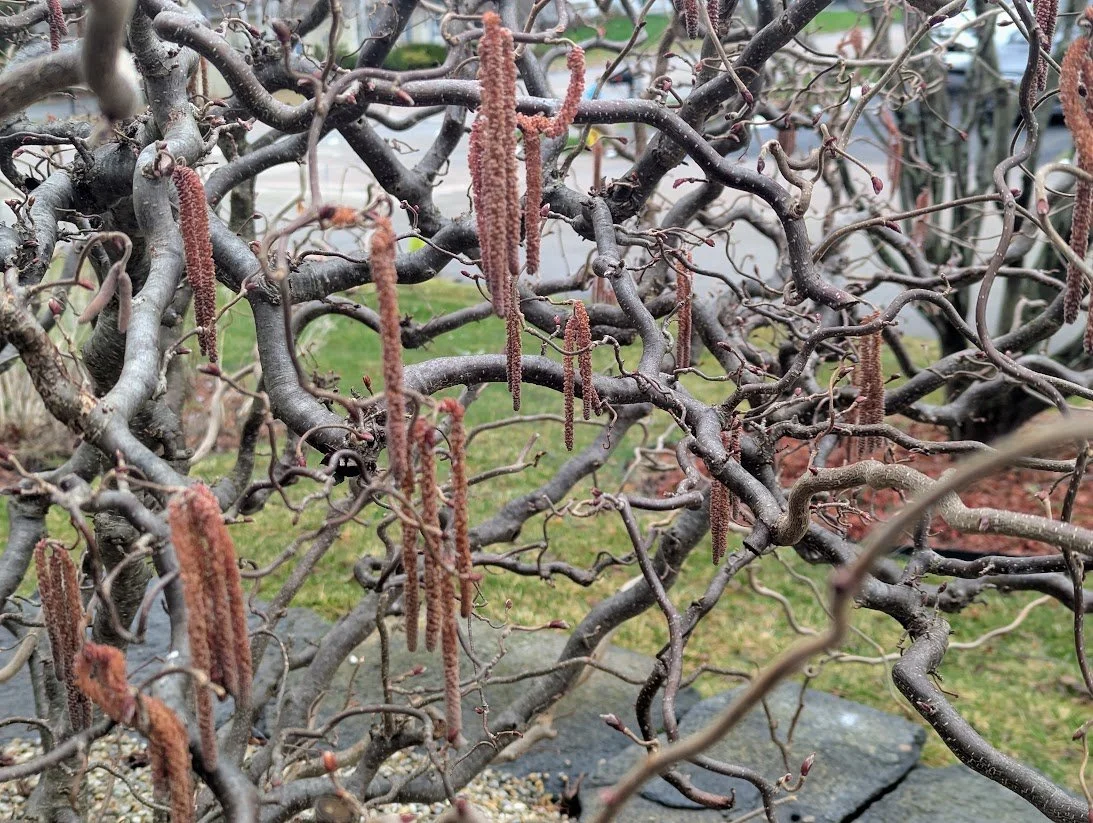
I spend a great deal of time looking out our windows (click images above for larger view). I love observing plant structure, bloom, foliage and berries throughout the seasons. Windows frame the garden and evoke completely different emotions compared to viewing the same plants from outside. A favorite image is of our old cat Harry, may he rest in peace. When he wasn’t napping, he loved watching the chipmunks and birds outside ‘his’ basement window scampering through the Major Wheeler honeysuckle, columbine and allium.
Today, I enjoy gazing out from my living room ‘reading corner’ at the native Rhus typhinia, aka ‘Staghorn sumac’ that emerges improbably from the boulder retaining wall. The fall color is epic and is enhanced by the layers of leaf and needle texture and color from our neighbor’s landscape with a spectacular Oxydendrum arboreum ‘Sourwood’ a few feet beyond. This winter, I will appreciate the stark beauty of the Japanese maple ‘Mikawa Yatsubusa’ and the Corylus avellana contorta ‘Red Dragon’ coated with snow and ice, followed by catkins in spring.
Over the years, I’ve helped neighbors select trees and shrubs for their landscape. I confess to selecting specimens that will give me pleasure from my window and vantage point. I’m anxiously awaiting our neighbor’s native Nyssa sylvatica, aka ‘Black Tupelo’ tree directly across the street (planted by my son-in-law a few years ago) to turn color. When the neighboring sugar maples have shed their leaves, the Nyssa will explode with shades of pink and red. A final hurrah for the foliage season!
Do you have an opportunity to improve your window view this fall, or perhaps next spring? Something to consider as we prepare for the long winter months ahead.
wish list plants for fall color & wildlife support
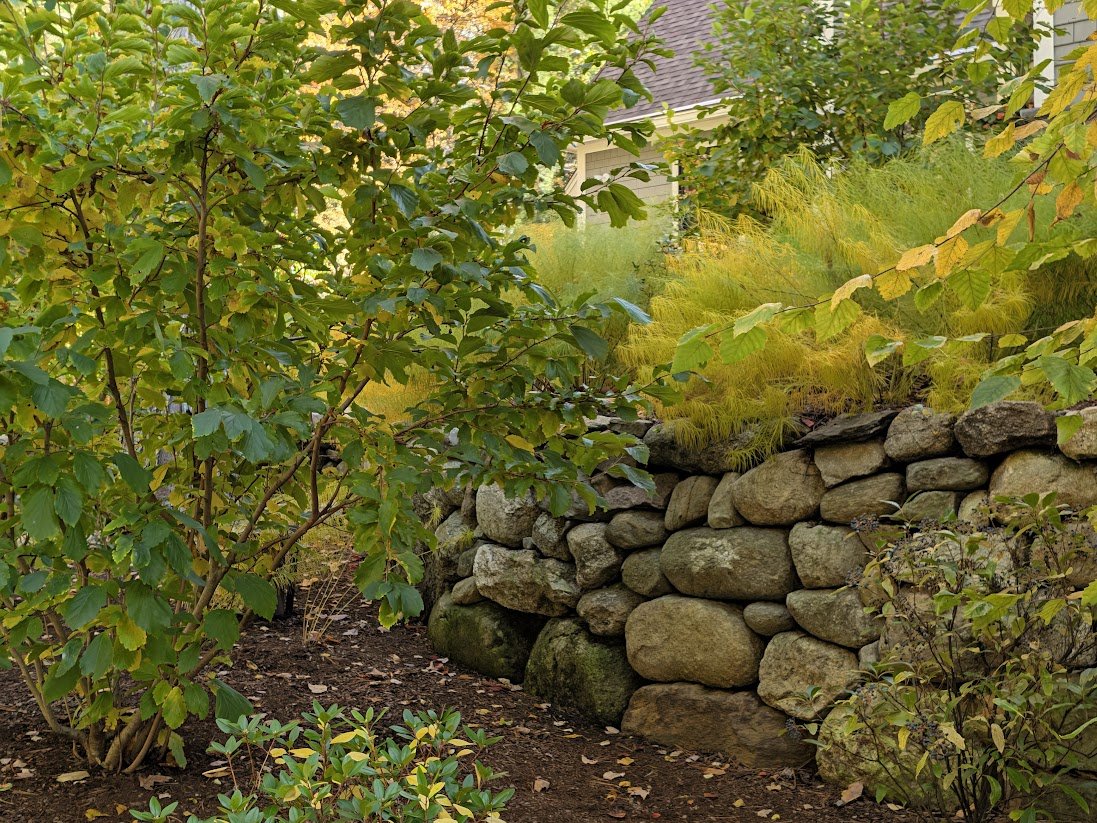
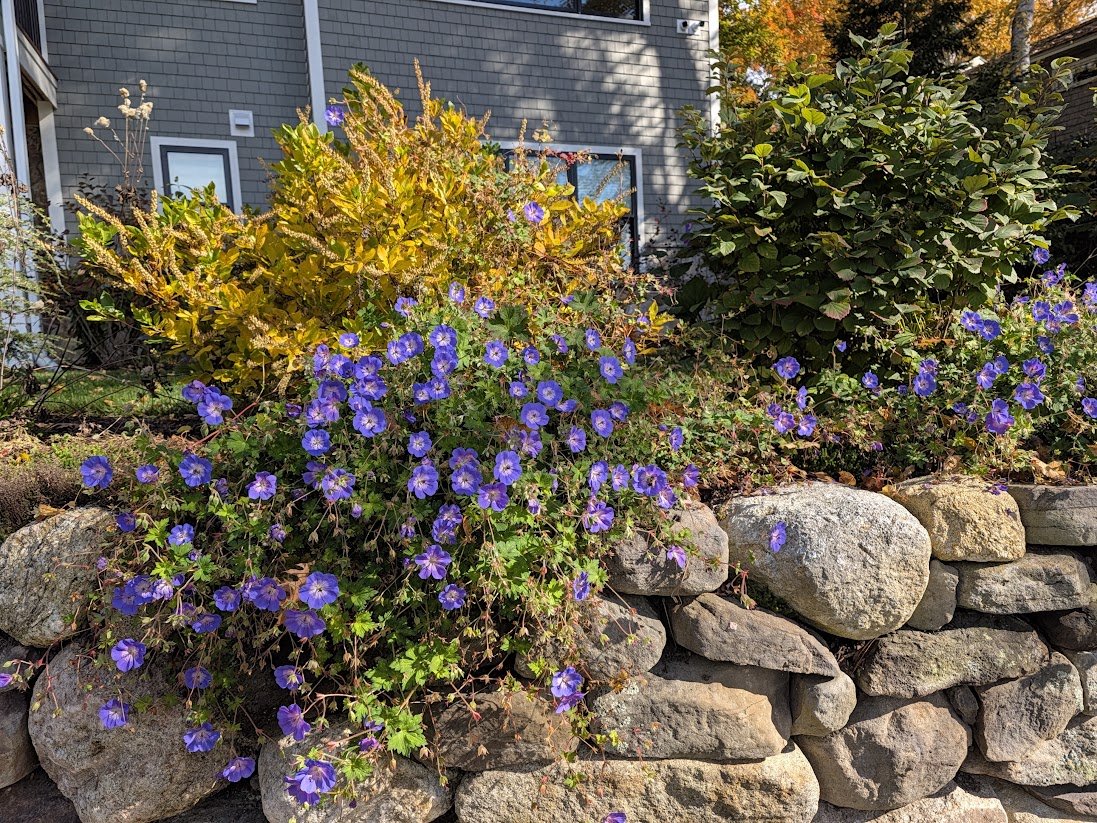
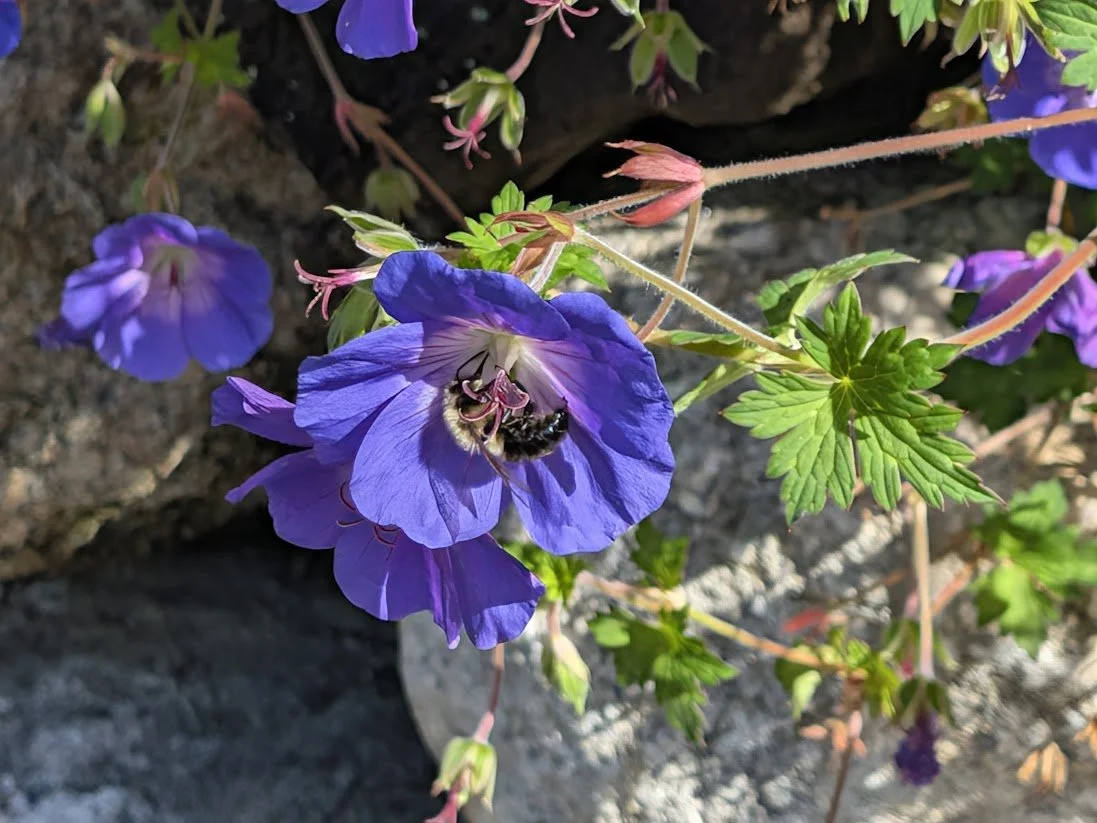
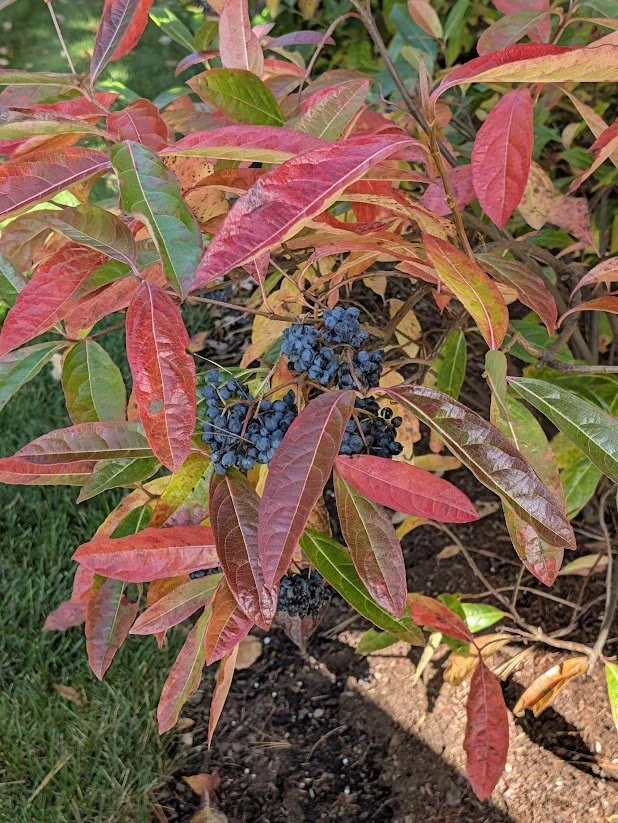
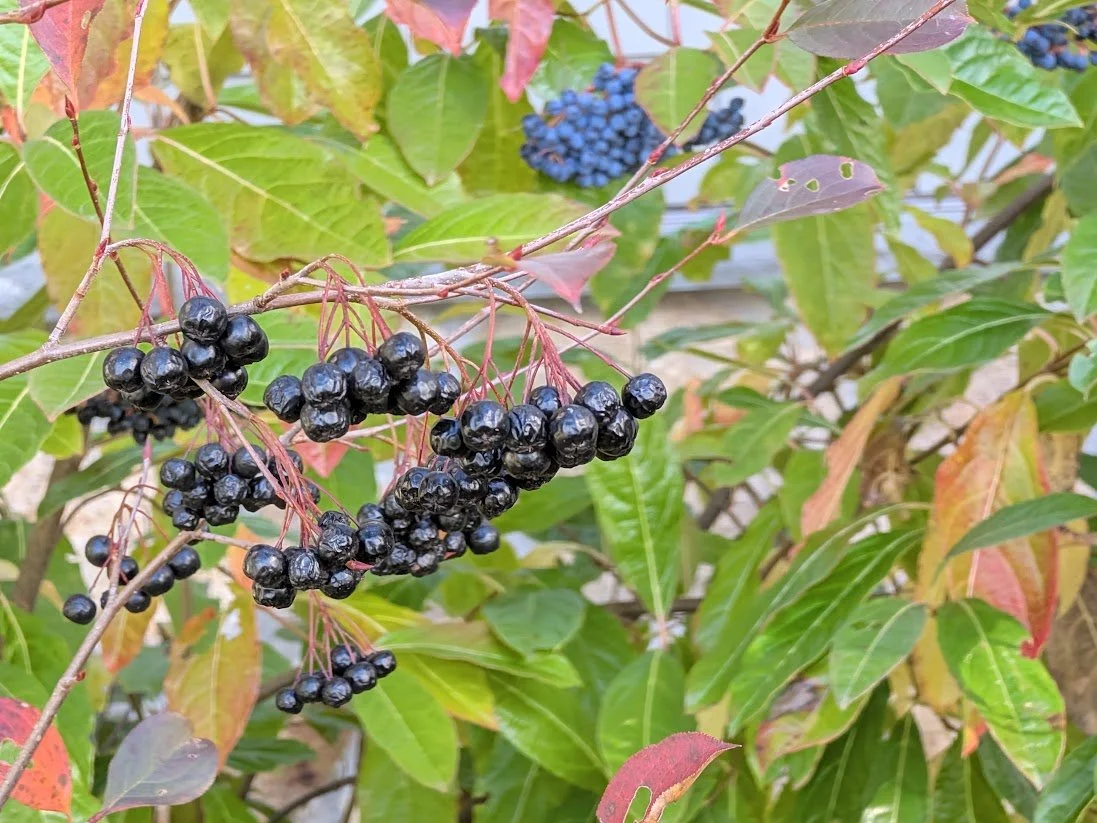
Yesterday I visited one of my favorite (and last) professional garden installations on Baboosic Lake, NH. When I designed this landscape in 2023, a primary goal was to create layers of colorful, textural habitat for wildlife. I knew that the autumn months would be spectacular on the lake and it was important to contribute to that mosaic. While the Hamamelis (witch hazel) shrubs are just starting to turn, the Amsonia hubrichtii and Clethra alnifolia were glowing shades of yellow and lime green. My favorite shrub additions, Viburnum nudum ‘Brandywine’ and Aronia melanocarpa, aka ‘Chokeberry’, revealed burgundy foliage with stems drooping under the weight of berries. The fruit won’t be ‘ripe’ until the freezing winter months, which is a perfect time to help sustain the birds as other food sources will be in limited supply.
Not to be outdone, the Geranium ‘Rozanne’ has grown to massive proportions and spills luxuriantly over the large boulder walls. It is hands down my favorite groundcover! Even though it is lake facing, this hardy cranesbill flourishes in the face of full sun and occasionally harsh winds. It was covered with bumblebees and honeybees yesterday, showing no sign of distress after a few below freezing nights. Another over-performer, I’m not surprised, as it has been blooming and growing with abandon in my garden since June.
If your fall landscape is lacking excitement, bloom and wildlife value, I can highly recommend all of these species!
now is the time to remove invasives from the landscape
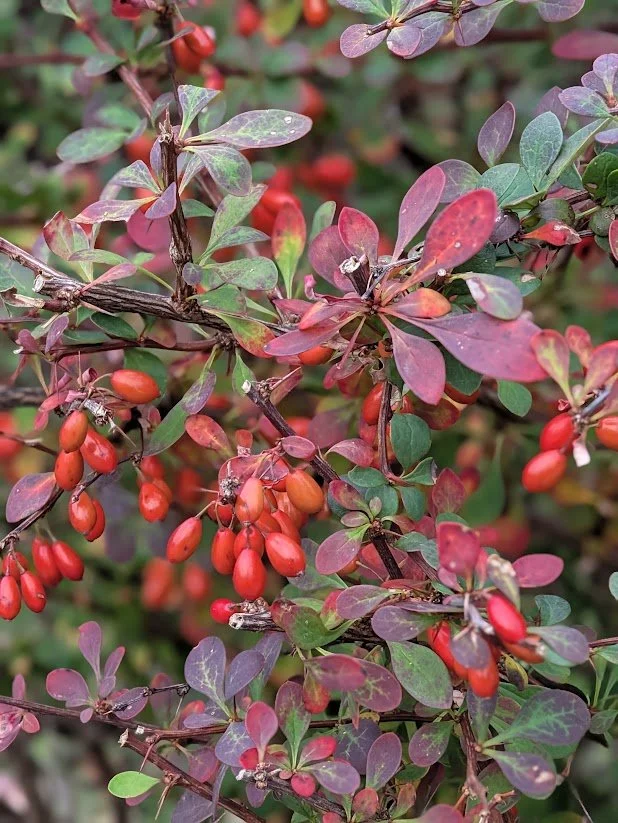
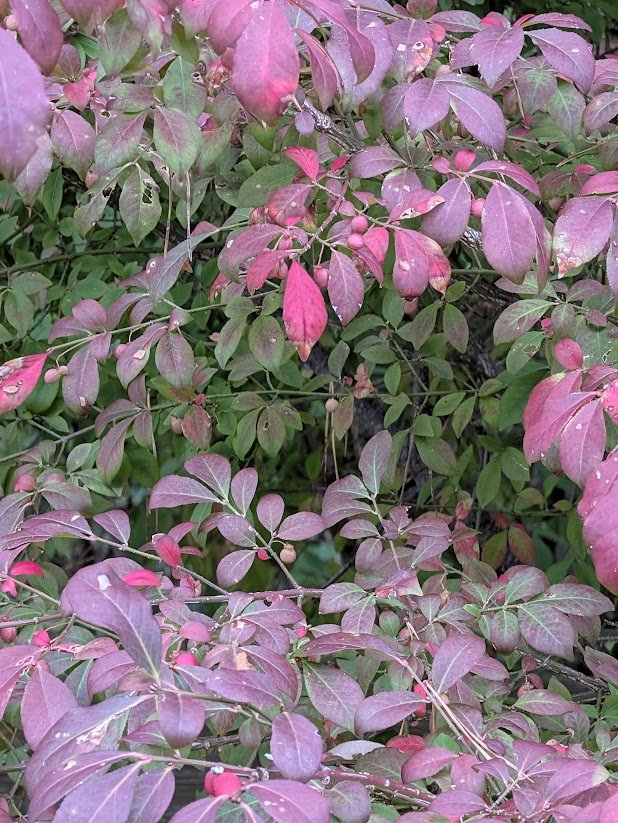
Since we are unburdened with traditional fall cleanup ‘chores’, we can pump up the ecological value of our landscapes by identifying and removing non-native invasives. In our south Nashua neighborhood, we are surrounded by highly invasive and problematic burning bush, Japanese barberry, Norway maple and more. These were all planted in the ‘80’s before the state of New Hampshire declared them invasive and prohibited their sale or propagation.
My morning walks become an emotional roller coaster as I marvel at the beauty of the native birch, sugar maples, conifers and oaks, then groan at the encroachment of the invasives. I see the birds devouring the berries and know that soon they will be ‘planted’ all throughout the neighboring woods. I personally found those on our property so distasteful that I removed them shortly after we moved here in 1995. I didn’t possess the knowledge of just how bad they were at the time, but looking back, I’m certainly happy that they were dispatched to the trash heap.
If you have multiple invasive species on your property, I understand that it can be a challenge to know where to begin. The first line of defense to prevent their dangerous spread is to remove the berries if you can’t tackle removing the entire plant right now. At least the birds won’t be able to distribute the seeds throughout the neighboring woods and landscape. Even better is to just chop the entire shrub down and dispose of it in the trash (not the compost)! If you can dig up the root ball now, perfect. If not, it will be there waiting for you in the spring. Hopefully by then you will have selected a native shrub replacement (many ideas in this post above!) and you can then say goodbye to the old and hello to the new.
For even more ideas and inspiration for beautiful trees, shrubs and perennials indigenous to New England, check out The Northeast Native Plant Primer, by Uli Lorimer of Native Plant Trust (affiliate link). It’s one of my ‘go to’ books for plant selection!
Thank you for reading and helping to spread the Gospel of Ecological Gardening. Every little bit helps!
~ Barb